


The Bone Density Reading That Decides If You Qualify for Teeth in a Day
Missing several teeth doesn't automatically mean you qualify for teeth in a day. It's a common assumption, but the decision isn't based on age or how many teeth you've lost. It comes down largely to the quality and density of the bone underneath.

Missing several teeth doesn't automatically mean you qualify for teeth in a day. It's a common assumption, but the decision isn't based on age or how many teeth you've lost. It comes down largely to the quality and density of the bone underneath.
Every patient here goes through a careful assessment before this treatment gets recommended. The point is to make sure the implants are stable enough to support new teeth safely while healing takes place, and placing them on the same day only matters if that's true.
What "teeth in a day" actually means
The name is a little misleading. Teeth in a day doesn't mean permanent teeth go in immediately. Implants are placed and, where appropriate, a fixed temporary bridge is attached the same day, so you leave with teeth rather than facing months without any. Once healing is complete, that temporary bridge is replaced with the final restoration. For a lot of patients, this restores confidence far sooner while the implants integrate with the bone underneath.
Why bone density decides so much
Implants rely entirely on surrounding bone for support. Right after placement, an implant needs enough stability to stay secure while the bone heals around it. If the bone is too soft or there isn't enough volume, placing teeth immediately raises the risk of movement during healing, which is exactly where bone density becomes the deciding factor. A patient can be a perfectly good candidate for implants generally, while not yet being right for teeth in a day specifically.
How bone quality actually gets measured
This isn't guesswork. Before recommending teeth in a day, we carry out detailed imaging using a CBCT scan, a three-dimensional scan that lets us assess bone height, width and density, the position of nerves nearby, where the maxillary sinuses sit, and any areas where bone has reduced following tooth loss. That scan tells us whether immediate loading is appropriate, or whether a different treatment plan would be the safer route.
Does everyone need a bone graft first?
No. Plenty of patients have enough healthy bone to support implants without any additional work. Others benefit from a bone graft before implant treatment begins. That's not a setback, just one way of building a stronger foundation when extra support is needed. Whether grafting comes into it depends entirely on your individual scan, which is why every teeth in a day consultation starts with proper planning rather than assumptions based on how the gap looks.
Why missing teeth affect bone over time
When a tooth is removed, the bone underneath stops getting the stimulation it used to get from chewing, and over time it naturally starts to shrink. The longer a tooth has been missing, the more likely some of that bone loss has happened already. That doesn't automatically rule out teeth in a day, but it can shape which options are actually available to you. Getting assessed sooner rather than later tends to leave more options open than waiting several more years.
What else gets factored in beyond bone
Bone density is only part of the picture. We also look at your general health, gum condition, existing teeth, your bite, smoking history, any medical conditions that could affect healing, and your day-to-day oral hygiene. Every one of those helps us judge whether immediate loading is genuinely likely to succeed. The safest treatment isn't always the fastest one, and that's worth being upfront about.
Does age affect whether you qualify?
Not usually, no. A lot of people assume they're either too young or too old for implant treatment, but age on its own rarely decides it. We've treated healthy older adults with excellent bone support, and younger patients who needed extra work first because of earlier bone loss. Bone quality, general health and how well someone heals matter far more than age alone.
Why the planning stage makes such a difference
Successful teeth in a day treatment starts well before the day itself. Digital planning lets us decide exactly where each implant should sit before anything happens, which improves accuracy and helps shape the temporary bridge that goes in straight after surgery. The more information we have going in, the more predictable the result tends to be.
The right treatment isn't always the quickest one
Plenty of patients are genuinely excellent candidates for teeth in a day. Others get a better long-term result by letting implants heal fully before new teeth are attached, and neither route is inherently better than the other. The goal is choosing whatever is safest for your mouth specifically and most likely to hold up over the years ahead. Every consultation here includes detailed imaging, a proper conversation about what you're hoping for, and a plan built around your scan rather than a generic answer. If teeth in a day is right for you, we'll explain exactly why. If it isn't yet, we'll explain that too.
Ready to find out where you stand?
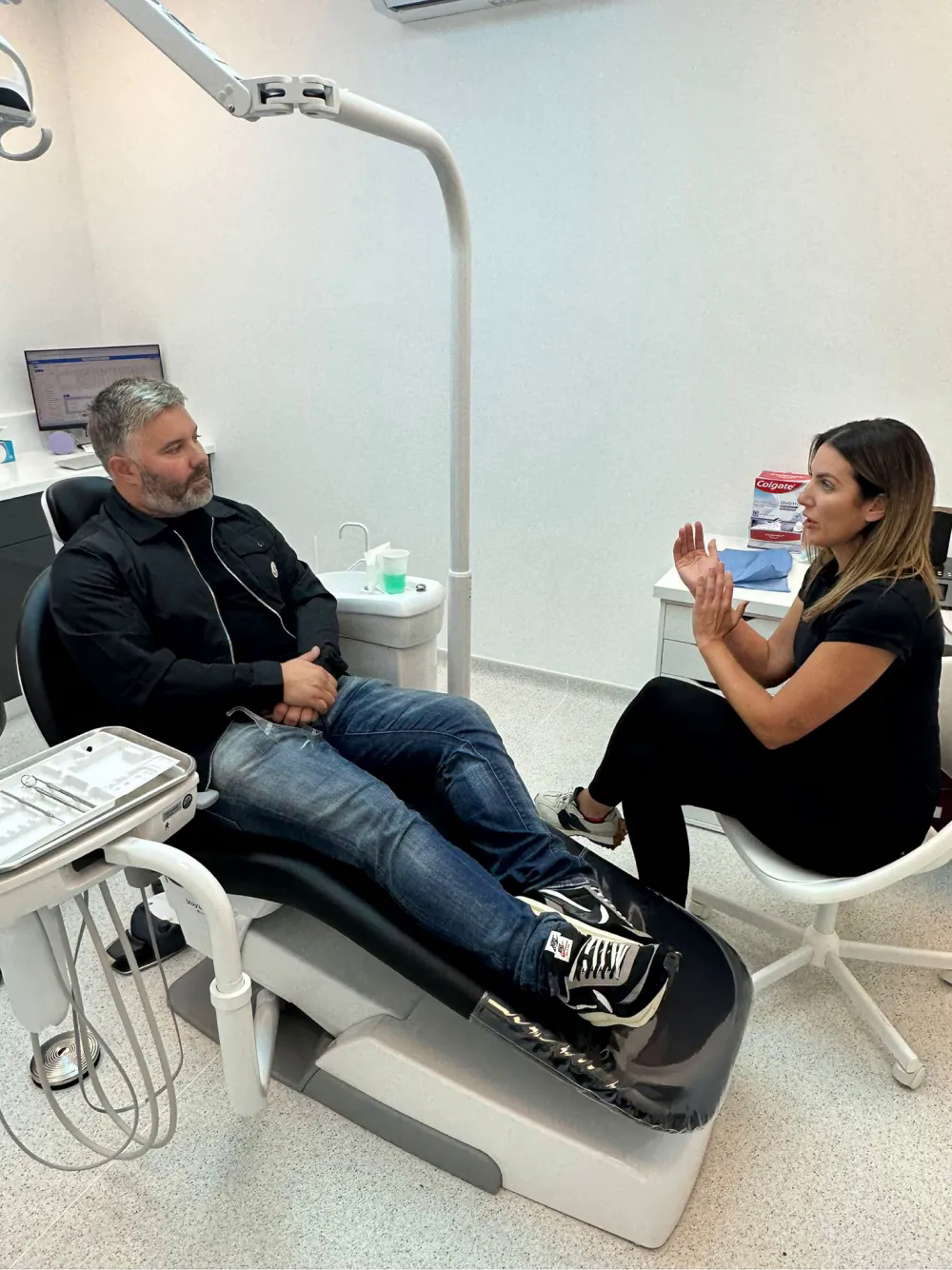
If you're thinking about teeth in a day, the first step is a conversation. We offer a free virtual consultation for dental implants, so you can talk through your situation before coming in. You'll find us at 45 Penistone Road North, opposite Sainsbury's, with free parking on site, and 0% interest finance over 12 months is available on treatment above £1,000.
Call us on 0114 352 2544 to book.
Frequently asked questions
Can anyone have teeth in a day?
No, it depends on bone density and volume, gum health and your general medical history.
Why is a CBCT scan necessary?
It gives a detailed three-dimensional view of your jawbone, which is what makes safe, accurate implant planning possible.
Does low bone density rule out implants altogether?
Not necessarily. A bone graft or a different implant approach may still work well.
Are the teeth fitted on the day permanent?
Usually not straight away. A temporary fixed bridge tends to go in first, with the final restoration following once healing is complete.
How long does healing take?
It varies, but implants generally need several months to properly integrate with the bone before the final restoration is fitted.
Browse related articles










Ready to get started?
Our team is happy to chat and tell you more about treatment options and costs, with no obligation for you to go ahead. Book a free consultation now to find out how we can help you makeover your mouth.
