


Bleeding Gums When Brushing? Here’s What You Should Do
Healthy gums do not bleed. Skin on your arm does not bleed when you wash it. Bleeding means something is inflamed, and inflammation has a cause worth finding. The good news is that caught early, bleeding gums are very treatable.

If your gums bleed when you brush, the single most useful thing to know is this: it is not normal, and it is not something to brush harder at or wait out.
Healthy gums do not bleed. Skin on your arm does not bleed when you wash it. Bleeding means something is inflamed, and inflammation has a cause worth finding. The good news is that caught early, bleeding gums are very treatable.
Understanding the causes of bleeding gums
Bleeding can happen for several reasons, and identifying the cause is the first step in dealing with it. Here are the most common ones.
1. Gingivitis
The most common cause by far. Gingivitis is the early stage of gum disease, usually the result of plaque building up on your teeth and along the gum line. When plaque is not removed through brushing and cleaning between your teeth, it irritates the gums, and inflamed tissue bleeds when disturbed. Gingivitis is reversible. At this stage nothing has been permanently lost, and with better daily cleaning and a professional clean, gums can return to full health.
2. Periodontitis
Left long enough, gingivitis can progress into periodontitis. The inflammation moves deeper and starts affecting the bone that holds your teeth in place, and that bone does not grow back. This is why we are insistent about early bleeding. Gum disease is the leading cause of tooth loss in UK adults, and it is largely silent. It rarely hurts until it is advanced, so bleeding when you brush is often the only warning you get.
3. Poor oral hygiene
Inconsistent or ineffective cleaning leads to plaque build-up, which leads to gum disease. Brushing twice a day and cleaning between your teeth daily significantly reduces the risk.
4. Hormonal changes
Hormonal fluctuations during puberty, menstruation, pregnancy or menopause can make gums more sensitive and prone to bleeding. Pregnancy gingivitis is common, worth taking seriously, and it is safe to be seen while pregnant.
5. Medical conditions and medication
Diabetes and gum disease feed each other in both directions. Blood thinners, some blood pressure medications and certain other drugs affect bleeding and gum tissue directly, so tell us what you take, because it changes what we are looking at.
6. Smoking, and a warning
Smoking constricts the blood supply to your gums, which means smokers often do not bleed even with significant gum disease underneath. The warning sign gets masked while the damage carries on. If you smoke, an absence of bleeding is not reassurance.
What you should do if you experience bleeding gums
If you notice bleeding when brushing, do not panic. There are steps you can take to tackle it effectively.
- Do not stop brushing the area. This is the instinct, and it is the wrong one. Bleeding gums need cleaning more, not less. Gently, but consistently. In most mild cases, the bleeding settles within a couple of weeks of proper daily cleaning.
- Clean between your teeth every day. Floss or use interdental brushes. Most gum disease starts between the teeth,
- which is exactly where a toothbrush cannot reach. If you do one new thing after reading this, make it this one.
- Brush properly. Twice a day with fluoride toothpaste, using a soft-bristled brush at an angle along the gum line rather than scrubbing across it.
- Watch your diet and stay hydrated. Vitamin C and calcium support gum health, and water helps saliva wash away food particles and control bacteria.
When to seek prompt attention
Occasional bleeding might not be a cause for alarm, but some situations warrant prompt dental attention:
- Bleeding that carries on despite two weeks of proper cleaning.
- Gums that are swollen, sore, or pulling back from your teeth.
- Teeth that feel loose or seem to have shifted.
- Persistent bad taste, bad breath, or any pus around the gums.
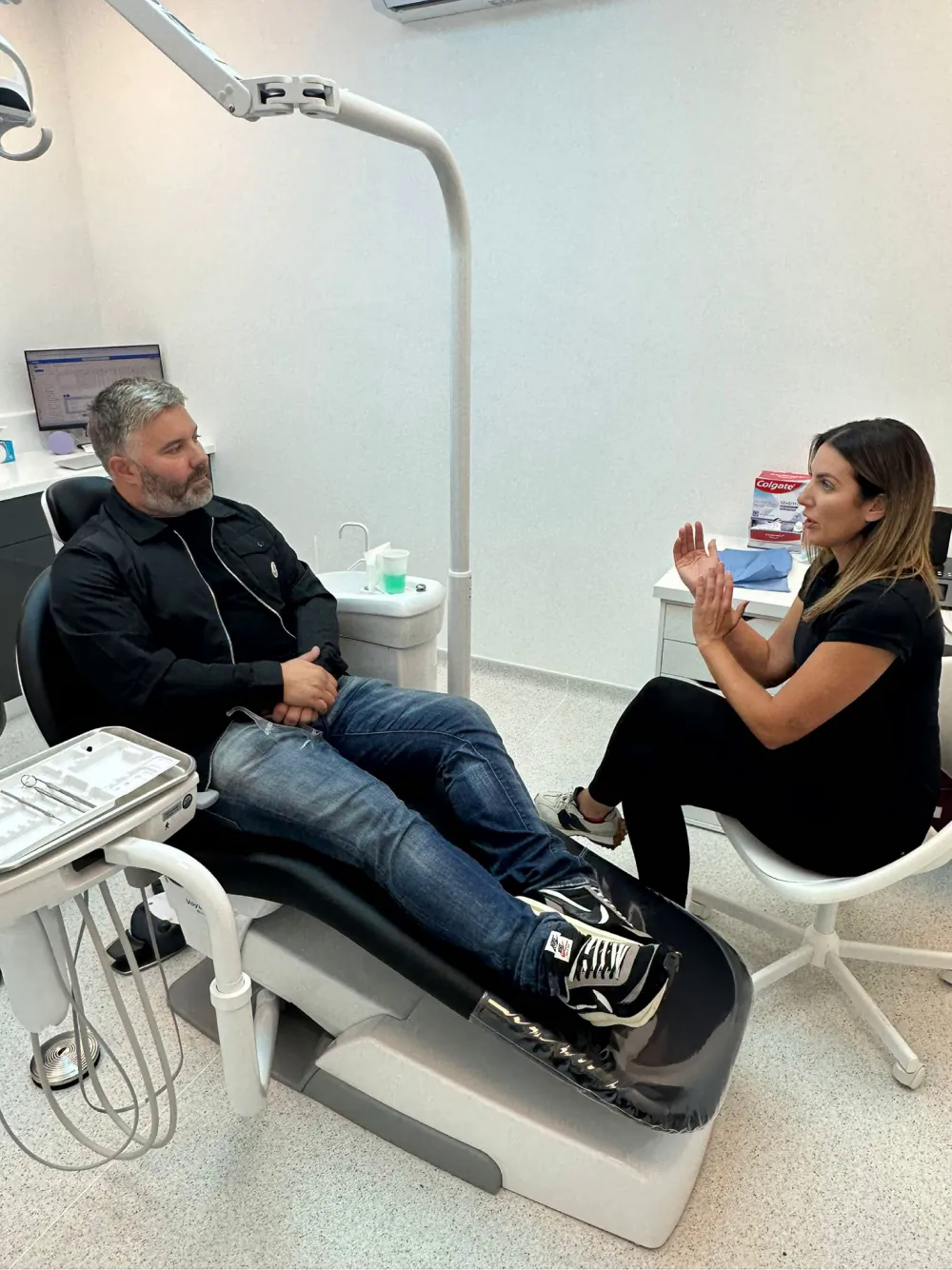
Gum health is assessed and treated by our hygiene team at our Sheffield practice.
Who you would see at Sheffield Smiles
Gum health sits with our hygiene team, led by Heather Wright, our hygienist and practice manager. She and the team assess your gums, tell you exactly what is causing the bleeding, and treat it before it progresses. If a case turns out to be more complicated, Dr Shirin Shahr Baf is a Consultant in Restorative Dentistry here and an Honorary Senior Clinical Lecturer at the Charles Clifford Dental Hospital. You are not being sent across Sheffield to repeat your history at a new reception.
Book a check-up
If your gums have been bleeding, get them looked at. Gingivitis is straightforward to treat. What follows it is not, and the difference between the two is mostly time.
You will find us at 45 Penistone Road North, on the main road opposite Sainsbury’s, with free parking on site. Call us on 0114 352 2544 or book through our website.
Browse related articles








Ready to get started?
Our team is happy to chat and tell you more about treatment options and costs, with no obligation for you to go ahead. Book a free consultation now to find out how we can help you makeover your mouth.
