


Why "95% Success at 10 Years" Is the Number Implant Dentists Actually Use
Ask three different dental implant clinics for their success rate and you'll likely get three different numbers: 98%, 99%, sometimes higher. What most of those figures don't tell you is how long the implant was actually followed before that number was recorded.

Ask three different dental implant clinics for their success rate and you'll likely get three different numbers: 98%, 99%, sometimes higher. What most of those figures don't tell you is how long the implant was actually followed before that number was recorded.
An implant that's healthy after one year tells you something. An implant still doing its job after ten years tells you a great deal more. That's the number implant dentists pay attention to, and it's worth understanding before deciding whether dental implants in Sheffield are the right option for you.
Why the ten-year figure matters more than the one-year one
Implants are designed to replace missing teeth for many years, not just the first few after treatment. Most heal successfully in the months right after surgery, so the more useful question is what happens well beyond that. Researchers have followed thousands of patients over long periods to answer exactly that. One large review published in 2019, pooling results from multiple studies, found an average survival rate of around 96.4% after ten years. A more cautious analysis in the same review, which allowed for patients lost to follow-up, put it nearer 93%. Somewhere around 95% is a fair way to sum up what the best evidence suggests.
That doesn't mean every implant lasts precisely a decade and no longer. Plenty continue working well beyond that. But long-term evidence like this gives a far more realistic picture than a short-term statistic on its own. When people ask us about dental implants in Sheffield, this is the kind of number worth paying attention to, rather than an impressive-sounding percentage with no context behind it.
What "survival" actually means in practice
This trips a lot of people up. An implant surviving doesn't just mean it's still physically there. It means it's stable enough to support normal function without needing to come out. When we check on an implant, we're looking at whether it feels stable, how healthy the surrounding gum is, how much supporting bone remains, whether the crown is functioning properly, and whether you're comfortable eating and speaking with it. None of that stops once treatment is finished. It's an ongoing picture we build over years.
What actually helps dental implants in Sheffield last
Success depends on more than the implant itself. Gum health plays a genuinely big role. Implants can develop inflammation around them if plaque isn't cleared properly, in much the same way natural teeth can, so regular hygiene appointments matter here just as they do elsewhere in your mouth. Bone support matters too. Before recommending dental implants in Sheffield, we assess whether there's enough healthy bone to hold the implant securely, and in some cases a bone graft beforehand improves the site enough to make treatment viable.
Daily cleaning still counts. Even though implants can't develop cavities the way natural teeth do, the gum around them absolutely still needs brushing and interdental cleaning to stay healthy. And regular reviews let us catch small changes early rather than after they've become bigger problems. A healthy implant isn't something that gets fitted once and then forgotten about.
Does age rule you out of dental implants in Sheffield?
Not usually, no. A lot of patients assume they're too old for implant treatment, but age on its own is rarely the deciding factor. We put far more weight on general health, gum condition and bone quality than on the number of birthdays someone has had. Patients in their sixties, seventies and beyond regularly go through successful implant treatment when they're otherwise suitable candidates. Every assessment is individual rather than based on age alone.
What can work against long-term success
Implants have strong long-term outcomes overall, but a few things increase the chance of complications. Smoking is the main one. It affects blood flow and slows healing, which can influence how well an implant integrates with the bone in the first place. Poorly controlled diabetes can affect healing too. Heavy teeth grinding at night puts extra pressure on implant restorations, which is why a protective night guard sometimes gets recommended alongside treatment. None of these automatically rule someone out, but they're all factored in carefully when we're planning dental implants in Sheffield for a specific patient.
Why the planning stage matters as much as the surgery
Treatment genuinely begins long before an implant is placed. We look at your medical history, existing teeth and bite, bone volume and gum condition, and take digital X-rays and 3D scans to plan the final position of the replacement tooth accurately. That planning stage is what lets us decide whether implants are appropriate at all, and position them for long-term function rather than just filling a gap. The implant itself is only one part of getting this right.
Treatment doesn't stop once the implant is fitted
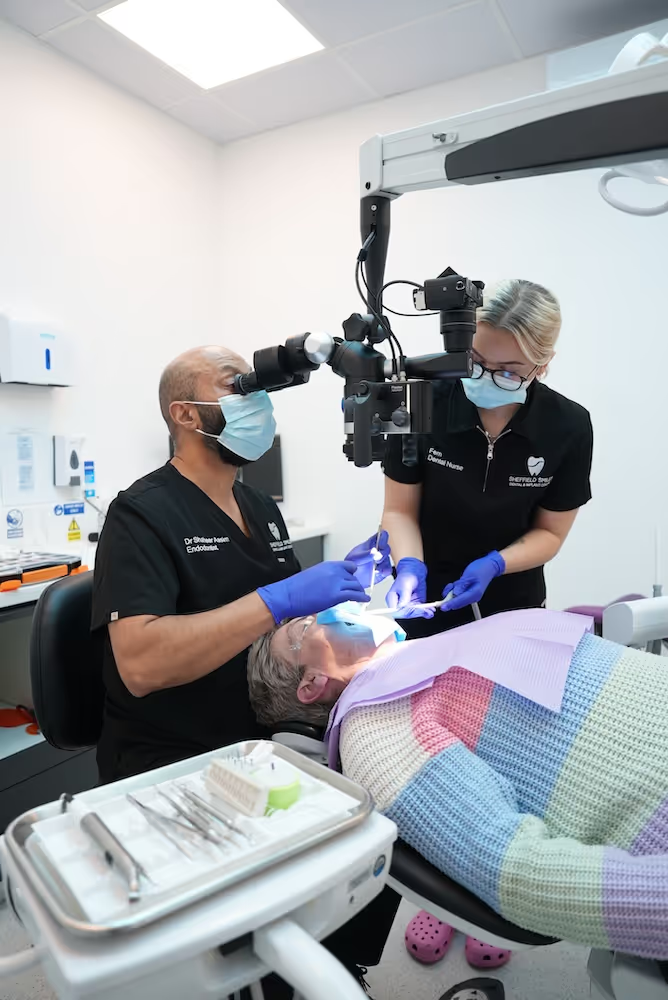
A lot of people assume the job is done once the new tooth is attached. In reality, ongoing care is what keeps implants healthy for years afterwards. Regular examinations let us monitor the bone and gum around the implant, check your bite, and professionally clean areas that are genuinely difficult to reach with a toothbrush alone. That continued attention is a real part of what makes dental implants in Sheffield work long term, alongside the placement itself.
Looking past the percentage
Success rates are useful, but they're not the whole story. The better questions are whether your mouth is healthy enough for an implant, whether proper planning has gone into it, and whether you'll be supported afterwards. Every assessment for dental implants in Sheffield starts with a detailed examination so we understand your oral health and can recommend what's genuinely suitable, rather than quoting a number and moving on.
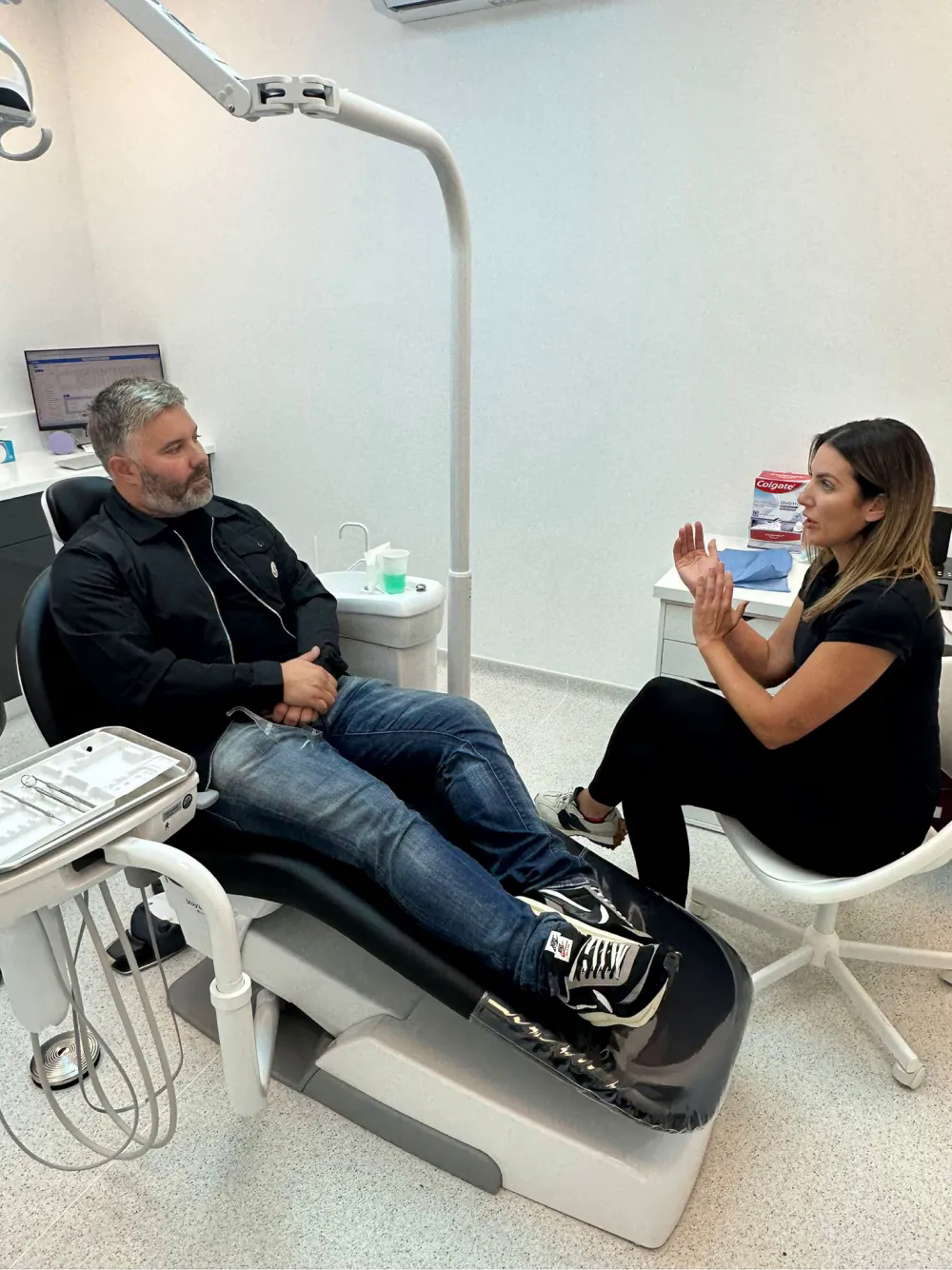
If you're considering dental implants in Sheffield, we'll walk you through the evidence behind long-term success, answer your questions honestly, and help you work out whether implant treatment is the right call for you.
Ready to talk it through?
We offer a free virtual consultation for dental implants in Sheffield, so you can ask your questions before committing to anything. You'll find us at 45 Penistone Road North, opposite Sainsbury's, with free parking on site, and 0% interest finance over 12 months is available on treatment above £1,000.
Call us on 0114 352 2544 to book.
Frequently asked questions
How successful are dental implants after ten years?
Long-term research puts survival at around 96% after a decade, though individual outcomes vary depending on health, bone quality and aftercare.
Can implants last longer than ten years?
Yes, many continue functioning well beyond that when properly maintained.
Do implants need special cleaning?
They can't develop cavities, but the surrounding gum still needs daily brushing, interdental cleaning and regular professional hygiene visits.
Can smokers still have dental implants?
Some can, but smoking increases the risk of healing problems and long-term complications, which we'd talk through during your assessment.
How often should an implant be checked afterwards?
Regular review appointments let us monitor the implant, bone and surrounding gum to help keep it working well long term.
Browse related articles










Ready to get started?
Our team is happy to chat and tell you more about treatment options and costs, with no obligation for you to go ahead. Book a free consultation now to find out how we can help you makeover your mouth.
